Tinnitus · Hearing
Your Hearing Test Came Back Perfect. So Why Won't the Ringing Stop?
For a large group of people, the ringing and the "normal" result aren't a contradiction. The sound was never coming from the ear.

You've done everything right.
You saw the ENT. You sat in that soundproofed booth. You raised your hand every time you heard the beep.
And then the audiologist came back with the result that should have ended the whole thing: "Your hearing is perfectly normal."
Normal. The word that was supposed to be a relief.
Except you went home, climbed into bed, the room went quiet, and there it was again. That high ring. That low buzz. The sound some people describe as crickets that never stop.
Normal hearing. Persistent ringing. And nobody with an explanation for the gap between them.
Here's what nobody told you at that appointment: the ringing and the normal test aren't a contradiction.
For a large group of people, they're exactly what you'd expect, because the sound was never coming from the ear in the first place.
The 30-Second Test That Changes Everything
Before we go any further, try this right now. Sit somewhere quiet and listen to the ringing for a moment. Then:
- Turn your head hard to the left. Then hard to the right.Does the pitch shift, even slightly?
- Clench your jaw, tight.Does the ringing get louder?
- Press firmly on the base of your skull.Any change at all?
- Push your lower jaw forward.Notice anything?
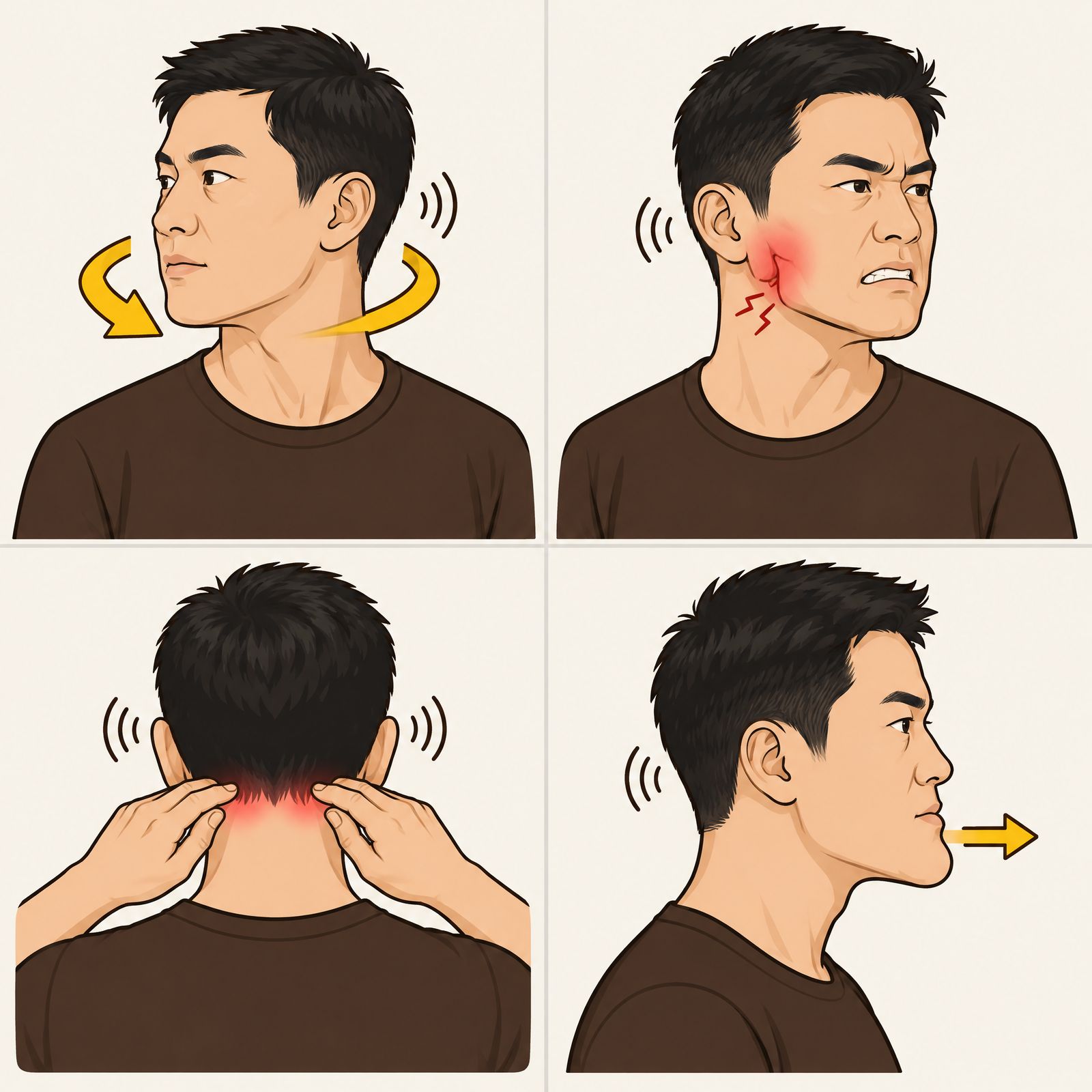
And that changes everything about what you should be doing next.
Free 5-minute phone assessment · No obligation
The Reason Your ENT Couldn't Find It
Think of your hearing like a camera wired to a screen.
An ENT is very, very good at checking the camera: the eardrum, the cochlea, the nerve endings. If the camera is clean, the report says "normal" and you go home.
But a picture can still come through wrong if the problem is in the cable, not the lens.
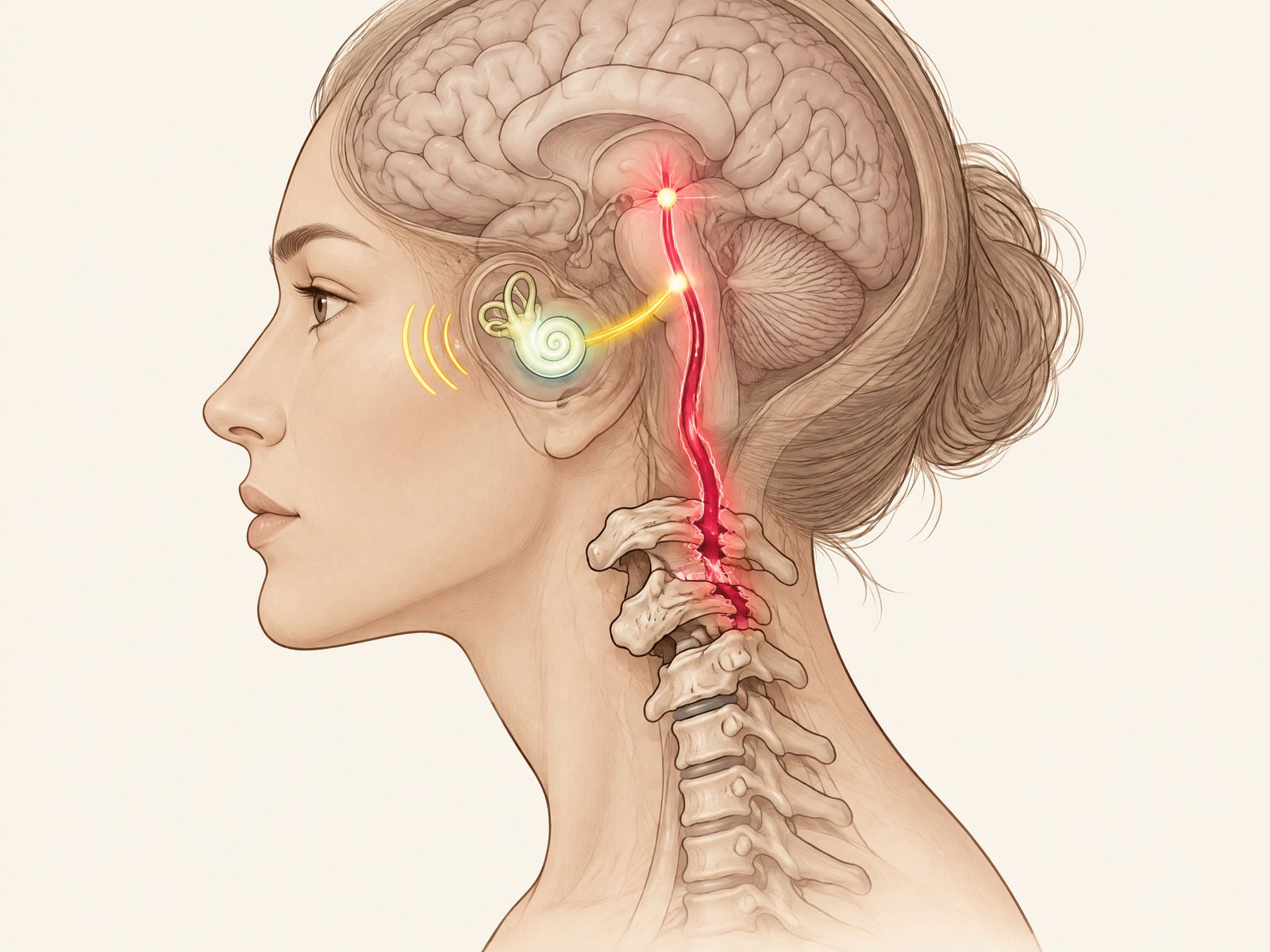
The nerves in your upper neck, the top three vertebrae (C1 to C3), feed into the same processing centre in the brainstem that handles sound.
When those vertebrae drift out of position (years of looking down at a screen will do it), they can send a stream of what researchers call neurological noise into that shared junction.
Your brain, missing clean signals, does the only thing it knows how to do.
It turns the volume up.
That turned-up gain is the ring you hear. The camera was fine the whole time.
The Story Dr Will Hears Almost Every Week

The details change. The pattern almost never does.
It usually starts small. Just at night. Then it creeps into the mornings. Then the meetings. Then the earbuds go in on the MRT, music turned up just to cover it.
Along the way there's an ENT. Sometimes a neurologist. An audiologist. Scans that come back clear. Everyone says the same thing: there's nothing wrong with your ears.
And then, almost as an afterthought, the neck comes up. The stiffness. The years of looking down at two screens for ten hours a day. The tension at the base of the skull that never really goes away.
Many people stop mentioning the ringing to anyone, because how do you explain a sound that apparently doesn't exist?
When Dr Will looks at an X-ray of a neck like that, he often sees the same thing: the natural forward curve of the neck has flattened, or even started to bend the wrong way. The structure has changed. Not the ears.
That's the part worth measuring. Because a curve can be measured, in degrees, before and after.
Why Everything Else Only Helped for a Few Days

Massage feels good. That's real. Physio can calm inflammation. Also real. TCM, acupuncture, white noise, even some medications: they can take the edge off.
But they work on the muscles. On the symptoms. On the signal.
None of them change the structure.
And if the structure is part of what's generating the noise, if C1 and C2 are sitting at the wrong angle, the muscles tighten back up the moment the treatment ends.
- Relief. Then ringing.
- Relief. Then ringing.
You know this cycle. You've been living it.
Structural correction is different because it works on the structure, not the signal.
Who Is Dr Will Kalla?

Dr Will Kalla
Structural correction specialist
- Trained at the Scandinavian Chiropractic College, Stockholm
- 29 years in practice, 20 of them in Singapore
- 3,000+ patients treated
- Creator of the R3NEW X™ structural correction system
Dr Will is not the crack-and-adjust kind.
He works on one thing: the structure of the neck. Measured precisely. Corrected methodically. Checked on X-ray before and after.
Plenty of clinics take an X-ray. That part isn't special. What's different is what happens after the film: R3NEW X™ (Release, Reset, Recalibrate), the structural correction system he spent over a decade developing.
And he's direct about what it is and isn't:
"In 29 years I've seen a consistent pattern: the patients who can change the pitch or volume of their ringing by moving their jaw or clenching their teeth almost always have a structural misalignment at C1-C2. That's a definitive sign the tinnitus is somatic. In those cases our protocol has a much higher success rate, because we're correcting a mechanical trigger, not treating an ear disease. But I'll say it plainly: not every neck is the cause, and not every case fully resolves. That's exactly why the first step is measuring it, not promising you anything."Dr Will Kalla
That last line is the whole reason to start with a look rather than a leap.
What the X-Ray Actually Shows
A healthy neck has a gentle forward curve. Dr Will's target for a normal curve is around 30 degrees.
In many people who've had neck pain, headaches or unexplained tinnitus for years, that curve is somewhere between flat and reversed.
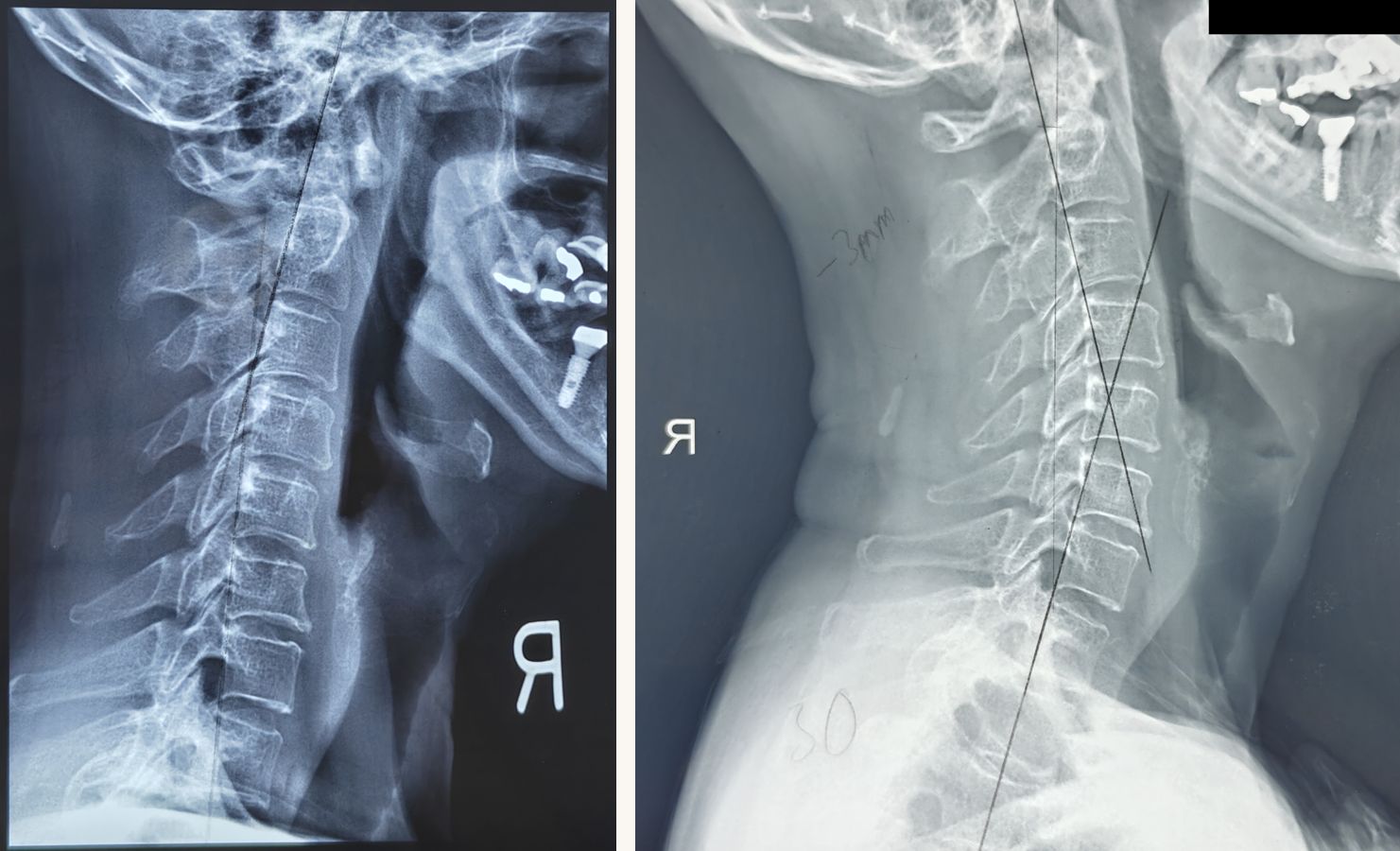
A recent case: a 57-year-old office worker in Singapore. His neck curve measured −10° on his first X-ray, +24° after 12 sessions, and 30° after 24. This case was neck and arm pain, not tinnitus, and it is one of Dr Will's best results. Shown to illustrate how the curve is measured. Results vary.
These aren't estimates. They're measured on X-ray, before and after.
That's not a claim. That's a record.
What Happens When the Structure Is Corrected
The goal of R3NEW X™ isn't to mask the sound with white noise, or to train your brain to ignore it.
It's to take pressure off the nerves at the base of the skull, so the brain has less reason to turn the volume up in the first place. When the structure improves, the aim is that:
- the neurological interference from the upper neck reduces
- the brainstem has less to compensate for
- the muscles stop fighting to hold a misaligned position
Not every case of ringing has a neck component. But if yours does, this is the part no ear test will ever look at.
Still Not Sure If This Is You?
Go back to that self-test.
If moving your head, clenching your jaw or pressing the base of your skull changed the sound even slightly, your tinnitus may have a mechanical component. That's the door this opens.
If nothing changed, you'll be told that plainly on the first call. Dr Will's results depend on taking the right cases, so there's no point in him taking one he can't help. You'll have lost nothing but a phone call.
The First Step Isn't a Treatment. It's a Conversation.
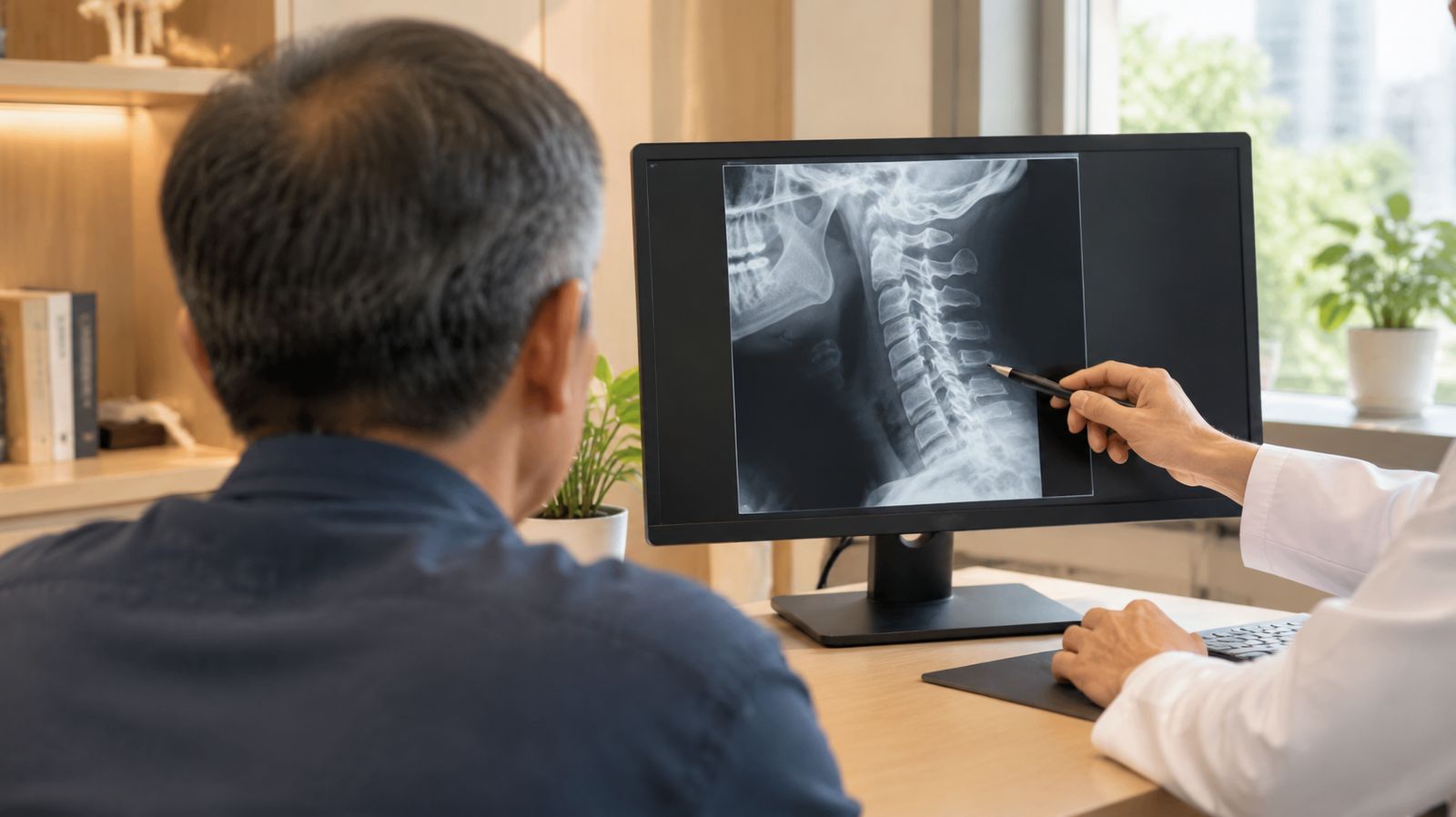
The first step is a free 5-minute phone assessment: a short call to check whether your case has the somatic markers worth investigating, and whether an in-clinic structural evaluation makes sense for you.
If the signs point to your neck, you'll know what's likely driving the sound and what correcting it would involve. If they don't, you'll know that too.
You've already checked the camera. This is the first person offering to check the cable.
Check If Your Tinnitus Is Coming From Your Neck
Leave your details and pick a time for your free 5-minute call on the next page.
🔒 No obligation. If your case isn't a fit, he'll tell you straight.
- ❤️ 3,000+ patients treated
- ❤️ Structure measured on X-ray, before and after
- ❤️ 90-day structural correction program with a money-back guarantee*
- ❤️ 29 years in practice, 20 in Singapore